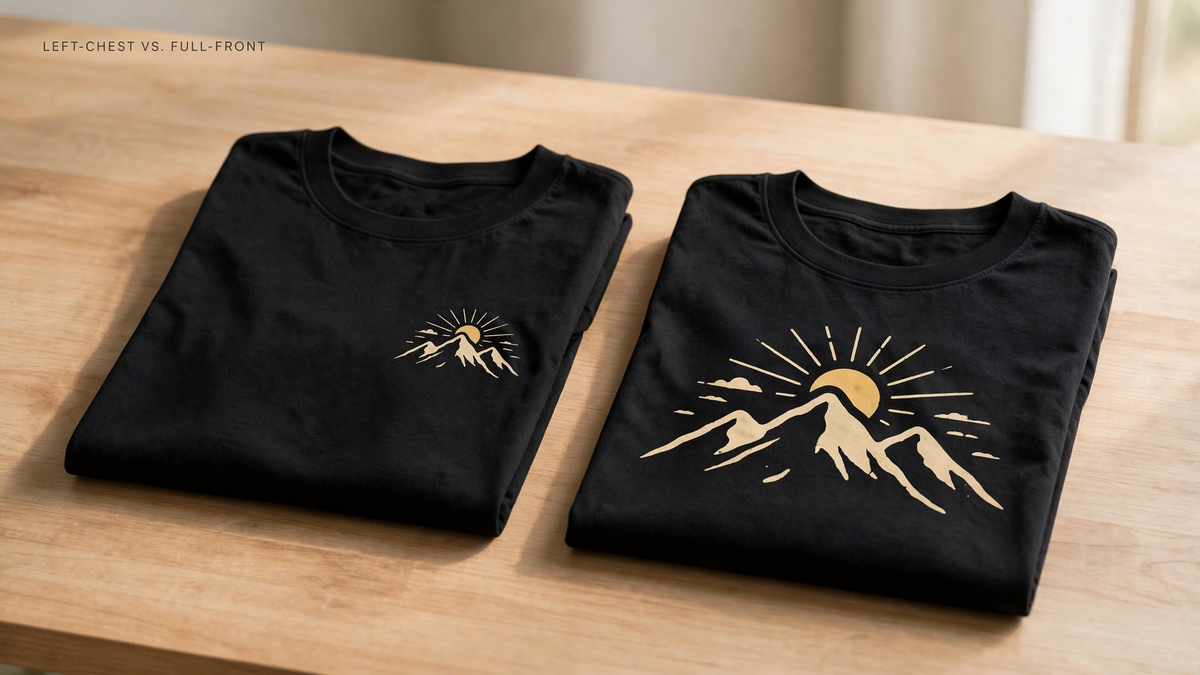

DTF print placement on pocket and zip garments needs a layout that respects raised areas. Check the blank before designing. A graphic can look centered on screen while crossing a seam, zipper, or pocket edge that changes pressure and appearance during application. On this page
- Map the raised areas
- Judge the garment while worn
- Make the design fit the available space
- Confirm a suitable pressing setup
- FAQs
Map the raised areas
Lay the garment flat and identify pockets, seams, zip tracks, drawcord openings, and any existing decoration. Measure a usable flat area for the graphic. Keep the artwork out of the zipper's working path and avoid treating the whole front panel as one uniform pressing surface.
Judge the garment while worn
Use a paper print to inspect the position on an actual wearer or suitable form. A mark placed neatly between two flat reference points can appear off-center when a pocket hangs or the zipper is open. Check the intended wearing position before approving it.
Make the design fit the available space
Choose a smaller or repositioned graphic when the clear panel is narrow. Do not force essential lettering across a pocket just to preserve a preferred width. A separate layout for this blank can be cleaner than making the original shirt design work everywhere.
Confirm a suitable pressing setup
Use Wholesale DTF Transfers with instructions appropriate to the transfer, blank, and equipment. Ask about the method for the exact garment rather than inventing heat or pressure settings. Test one representative piece and check both the print and garment before committing to the production run.
FAQs
Can DTF be applied across a zipper?
Do not assume it is an appropriate layout. Avoid working hardware and confirm the exact garment and application method; a flat-shirt workflow does not establish success across a zipper.
Do pockets affect print placement?
Yes, they change the available area, visual balance, and pressing surface. Check a physical blank and plan a layout that keeps important artwork in a suitable clear area.
Should I use the same file as a plain T-shirt?
Only after checking size and placement. A pocket or zipper may require a separate arrangement so lettering and important details stay out of raised or moving areas.
What should the first garment test cover?
Check position, adhesion, garment condition, usable hardware, and appearance when worn. Record the equipment and approved process so the result can be reproduced on matching blanks.