
Good bumper sticker design starts with a short message and a layout that survives a quick glance. A sticker viewed on a moving street is not a business card. Tiny detail is easy to lose.
You can assess readability safely while the vehicle is parked. Decide which word or image should be noticed first, then remove anything that competes with it.
Quick answer: shorten the copy, use clear contrast, measure the intended position, and check a full-size mockup from realistic stationary viewing distances.
On this page
- Reduce the message
- Choose contrast at viewing distance
- Measure the placement area
- Review a full-size proof
- FAQs
Reduce the message
Choose one purpose: a short statement, a recognizable mark, or a simple contact destination. Trying to include all three can make the text too small.
Write the message in plain text before opening the design tool. Read it aloud. If it needs an explanation, it may belong on a website rather than a bumper.
Compare two versions: the full sentence and the shortest version that keeps its meaning. Use the short version in a paper mockup first.
The custom bumper sticker page is the relevant ordering path once the message and size are clear. The product's available dimensions should support the design, not rescue overly long copy.
Choose contrast at viewing distance
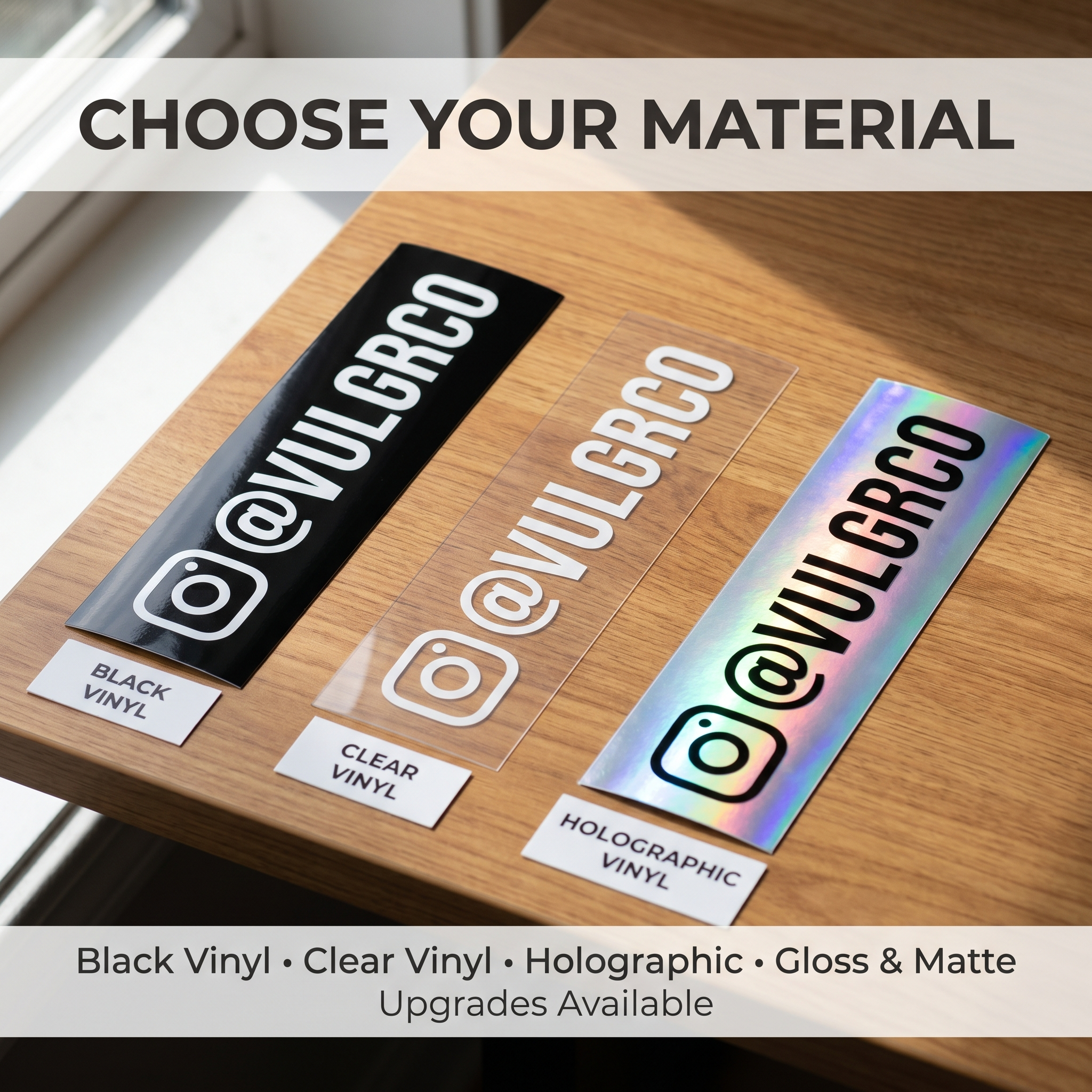
Give the main words a background they can stand apart from. A textured photo or multiple decorative outlines can make simple lettering harder to inspect.
Try a plain dark-on-light and light-on-dark version. Compare the actual-size layouts from the distance where you expect people to notice the parked vehicle.
Do not use color alone to distinguish essential information. If the message disappears when you view it without relying on its hue, the layout needs stronger separation.
A distinctive typeface can add personality, but its narrow strokes and decorative shapes still need to be readable.
Measure the placement area
Measure the chosen surface and check its shape. Curves, seams, cameras, lights, and existing vehicle information can reduce the usable area.
Avoid treating a bumper or painted panel as a generic flat surface. Ask for the actual product's surface preparation and adhesive guidance. Do not assume removal will be residue-free or harmless on every finish.
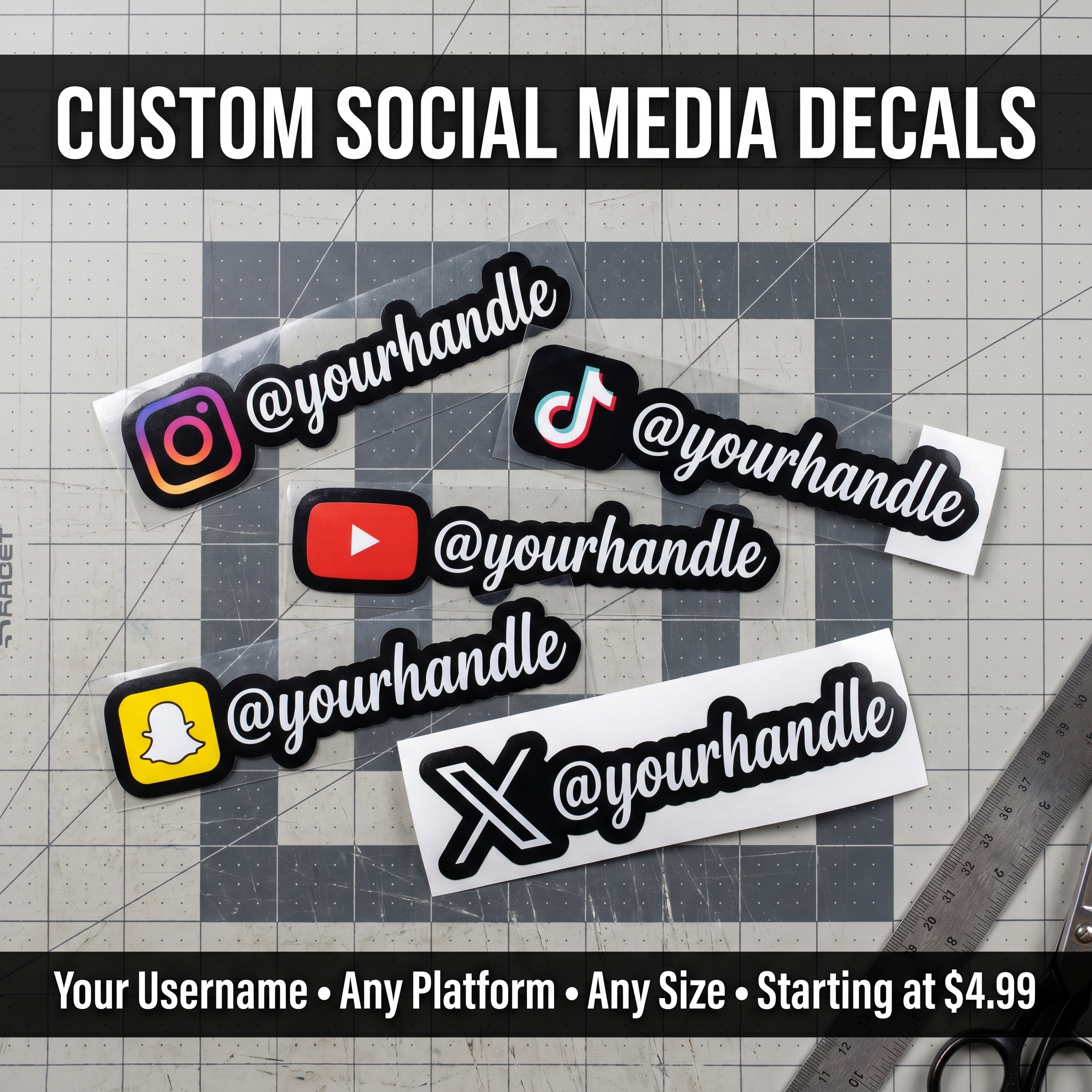
If comparing vinyl stickers for another part of the design, check their own application requirements rather than assuming all sticker options are interchangeable.
Placement worksheet:
- Available width and height.
- Surface material and condition.
- Curvature or seams.
- Clearance from vehicle components and required information.
- Intended length of use.
Review a full-size proof
Print the artwork at the ordered size and tape the paper mockup temporarily in position without damaging the surface. Check it while the vehicle is stationary.
Ask someone who has not seen the design to identify the message. If they read a secondary detail first, change the hierarchy.
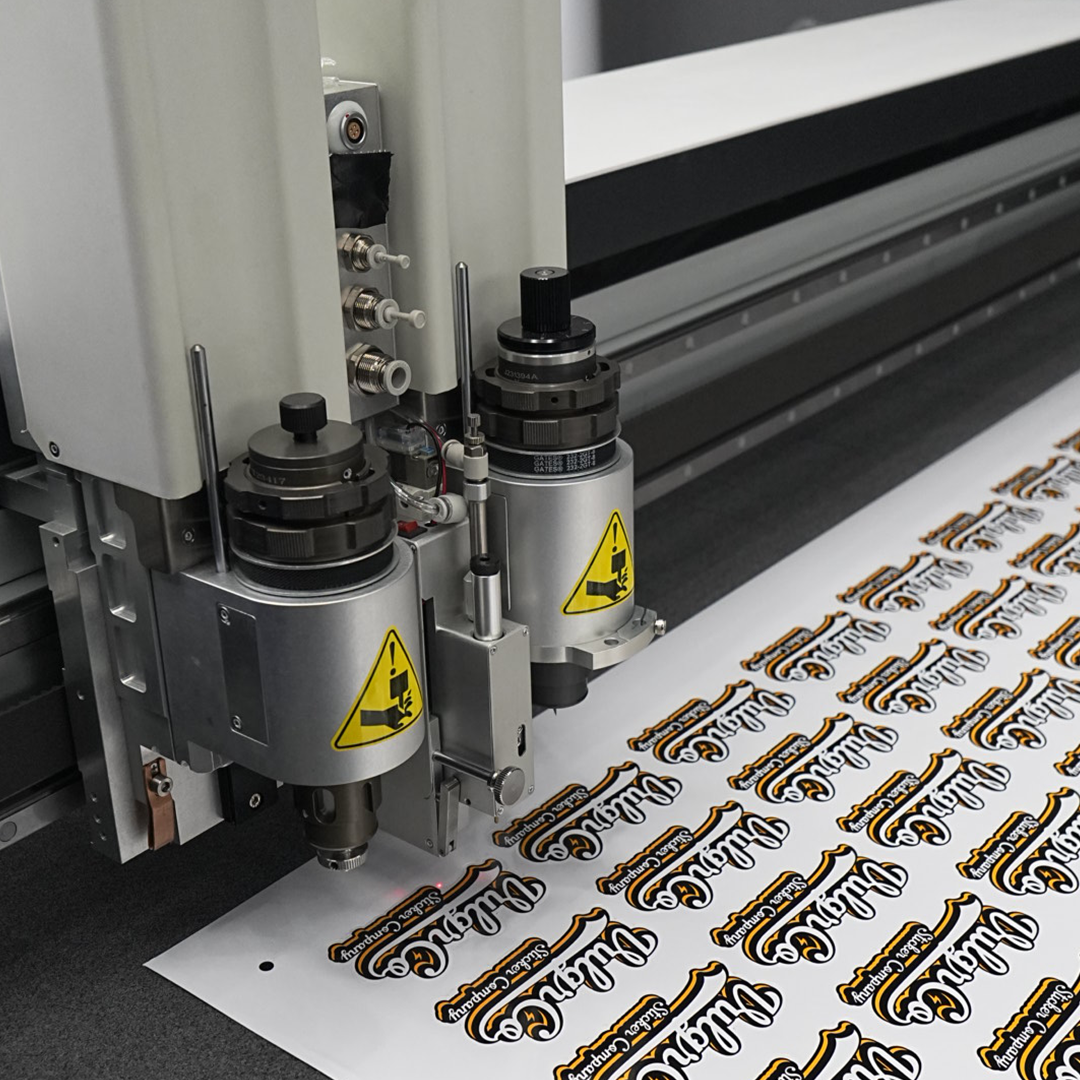
On the production proof, check spelling, borders, shape, and whether the final dimensions match your measured area. Keep important lettering away from the approved cut boundary.
A bumper sticker can be funny, bold, or direct. It still needs to be readable without turning into a miniature poster.
FAQs
How much text fits a bumper sticker?
The useful amount depends on dimensions, letter shapes, contrast, and viewing distance. Start with the main message and test a full-size mockup. If the text only works when enlarged on your screen, shorten it or choose a more suitable format.
Can a logo replace a headline?
Yes, when recognition is the goal and the logo remains clear at the intended size. A detailed mark with tiny lettering may need simplification. Compare it on the actual placement area and ask someone unfamiliar with the artwork what they can identify.
What should I check before application?
Check the current product's preparation instructions, the surface condition, placement dimensions, and clearance from vehicle components or required information. Test suitability where appropriate. Do not use generic cleaner or removal advice as a substitute for the specific adhesive guidance.
Does removal depend on the vehicle finish?
Yes, surface condition, paint history, adhesive, exposure, and time can affect removal. Ask for product-specific guidance and avoid promising a damage-free result on every vehicle. If preserving the finish is critical, resolve that requirement before applying the sticker.