
Custom sticker uses for small businesses are most useful when each design has a clear job. A package label identifies something. A giveaway can be a piece customers want to keep. A social sticker points people toward another interaction.
Start with that job before deciding how many designs to print.
A practical rule: choose one message, one placement, and one action you can explain. Treat any sales effect as something to measure, not something a sticker automatically delivers.
On this page
- Match a sticker to one job
- Design useful inserts and handouts
- Connect to a destination worth visiting
- Track repeat orders and response
- FAQs
Match a sticker to one job
List the places where customers encounter your business: parcels, pickup bags, event tables, or product packaging. Then give each print a purpose.
For example, a small maker might use a logo sticker as a packing insert, a product label on the container, and a separate QR sticker for care instructions. Those pieces share a visual identity but do different work.
Use custom stickers for the intended sticker project rather than assuming one layout should cover every business task.
Do not put several competing calls to action on a small design. If the customer cannot tell what matters, adding more copy will not help.
Design useful inserts and handouts
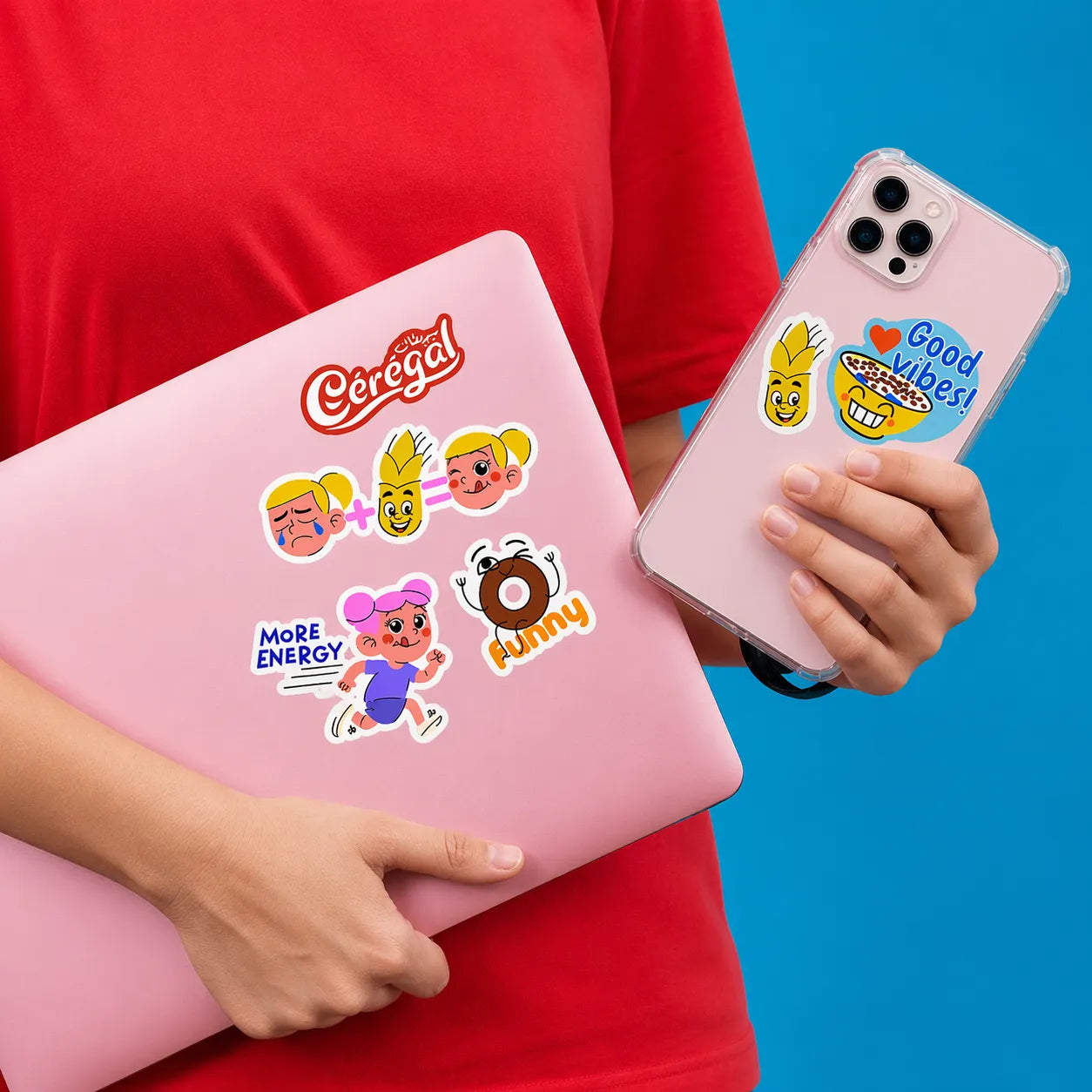
A giveaway should make sense outside your packaging. A clean logo, an appealing illustration, or a short phrase may be more useful to the customer than a long list of sales claims.
Think about where it could be applied and whether the dimensions suit that use. The object's surface and the material's documented limits still matter.
For packaging, look at the whole arrangement. A giveaway sticker need not repeat every detail already printed on the product label or order card.
Paper-test the piece beside the other packaging elements. If the parcel looks crowded, simplify rather than shrinking everything.
Connect to a destination worth visiting
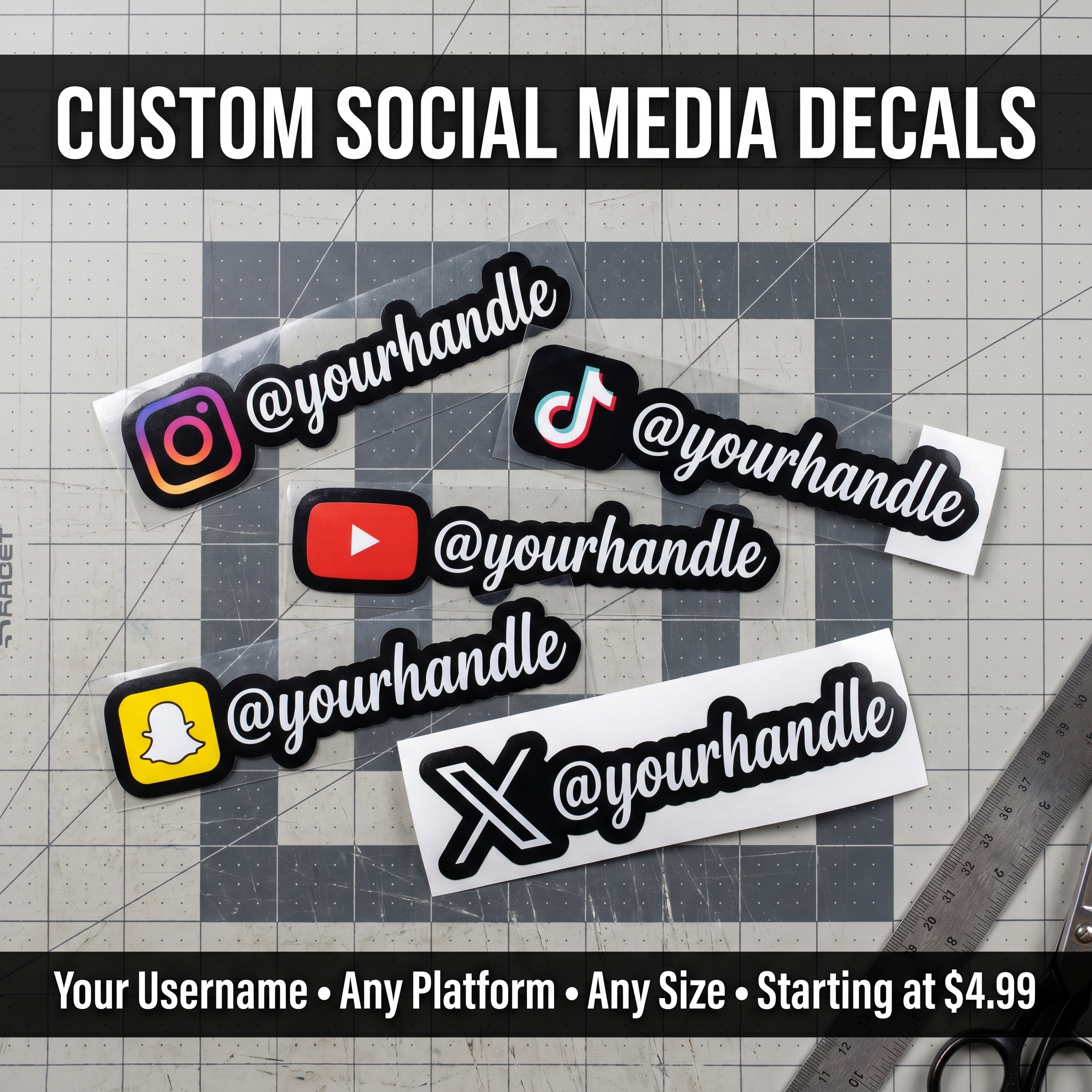
If the sticker includes a social handle, use the exact public username and check that it can be found without signing into your account. Social media stickers can support that recognition-based action.
If using a QR code, give the scan a reason: instructions, a useful collection, or a relevant page. A code with no explanation asks the customer to guess.
Match the landing page to the promise on the sticker. “Care guide” should open a care guide, not a homepage that requires several more searches.
Keep the destination in your upkeep checklist. A useful sticker becomes less useful when its account name or link is abandoned.
Track repeat orders and response
Record the design, quantity ordered, date, and where you used it. When you reorder, compare actual usage with your original estimate.
A straightforward monthly worksheet can include:
| Item | What to record |
|---|---|
| Packing use | Pieces included in parcels |
| Event use | Pieces handed out |
| Destination | Visits through a distinct tracked link, if configured |
| Reorder | Remaining stock and upcoming activity |
| Feedback | Repeated questions or requests |
Those records can show whether the piece is useful. They do not prove that every visit or order was caused by the sticker.
Start with a design you can assess and maintain. Add more only when there is a clear new job.
FAQs
What should go on a giveaway sticker?
Use something a customer can recognize or enjoy independently: a logo, illustration, or concise message. Keep supporting information readable. The design should fit a plausible application and the chosen material's use limits rather than function as a crowded business card.
How can I measure QR response?
Use a destination or tracking setup that distinguishes the sticker campaign, then review actual visits and later actions using your agreed analytics method. Test the link before printing. Scan counts or visits are useful signals, but they do not automatically establish sales attribution.
Should inserts use a sticker or a label?
Choose by purpose. An insert can be a loose giveaway sticker, while a product label conveys information on the packaging. Both may use related artwork, but their placement, size, content, and ordering format can differ. Confirm what the selected product actually supplies.
When should I reorder?
Compare remaining stock with upcoming parcels, events, and the current production and delivery guidance. Record how quickly the last batch was used. Avoid basing the deadline on an old promotion or assuming that production time and delivery time are the same.