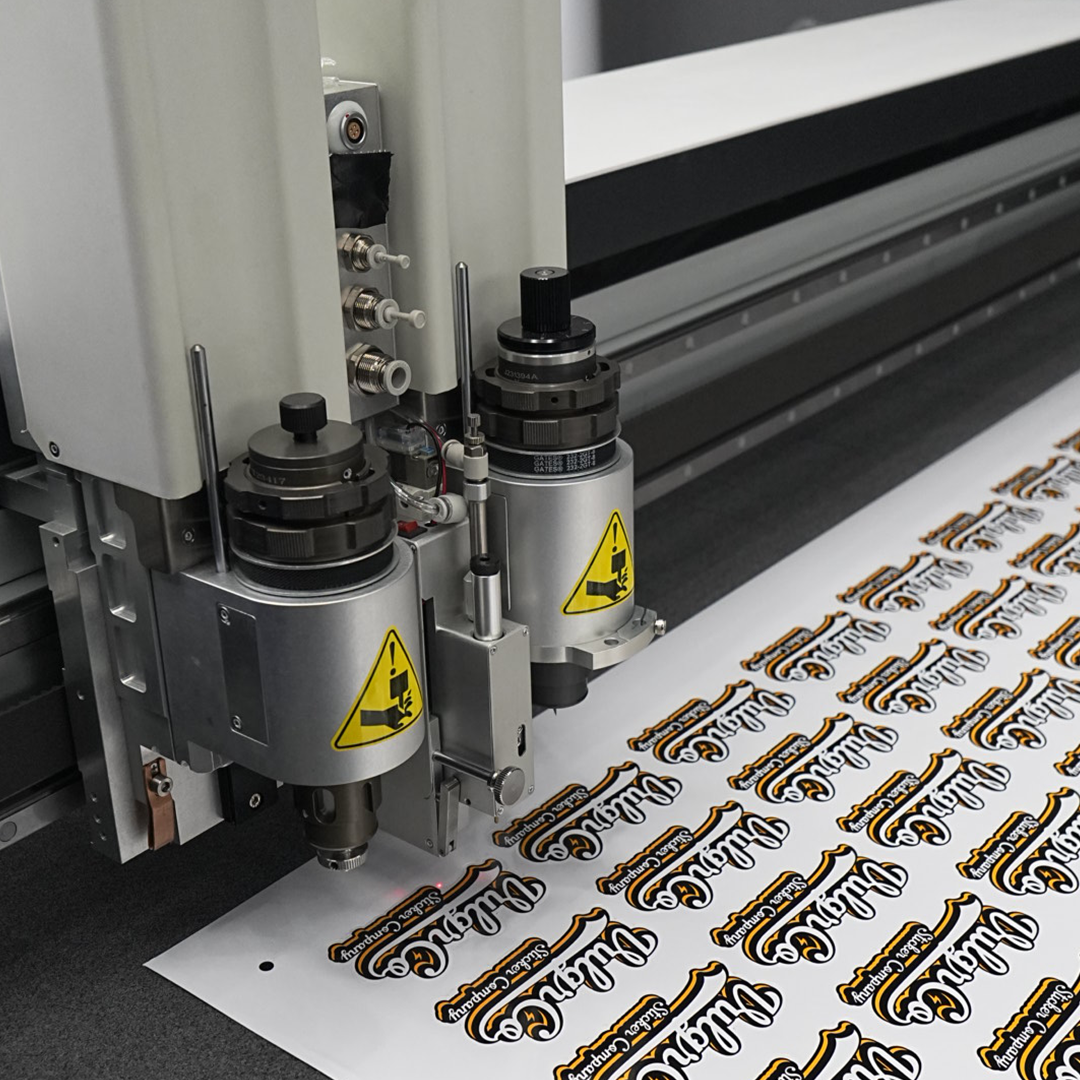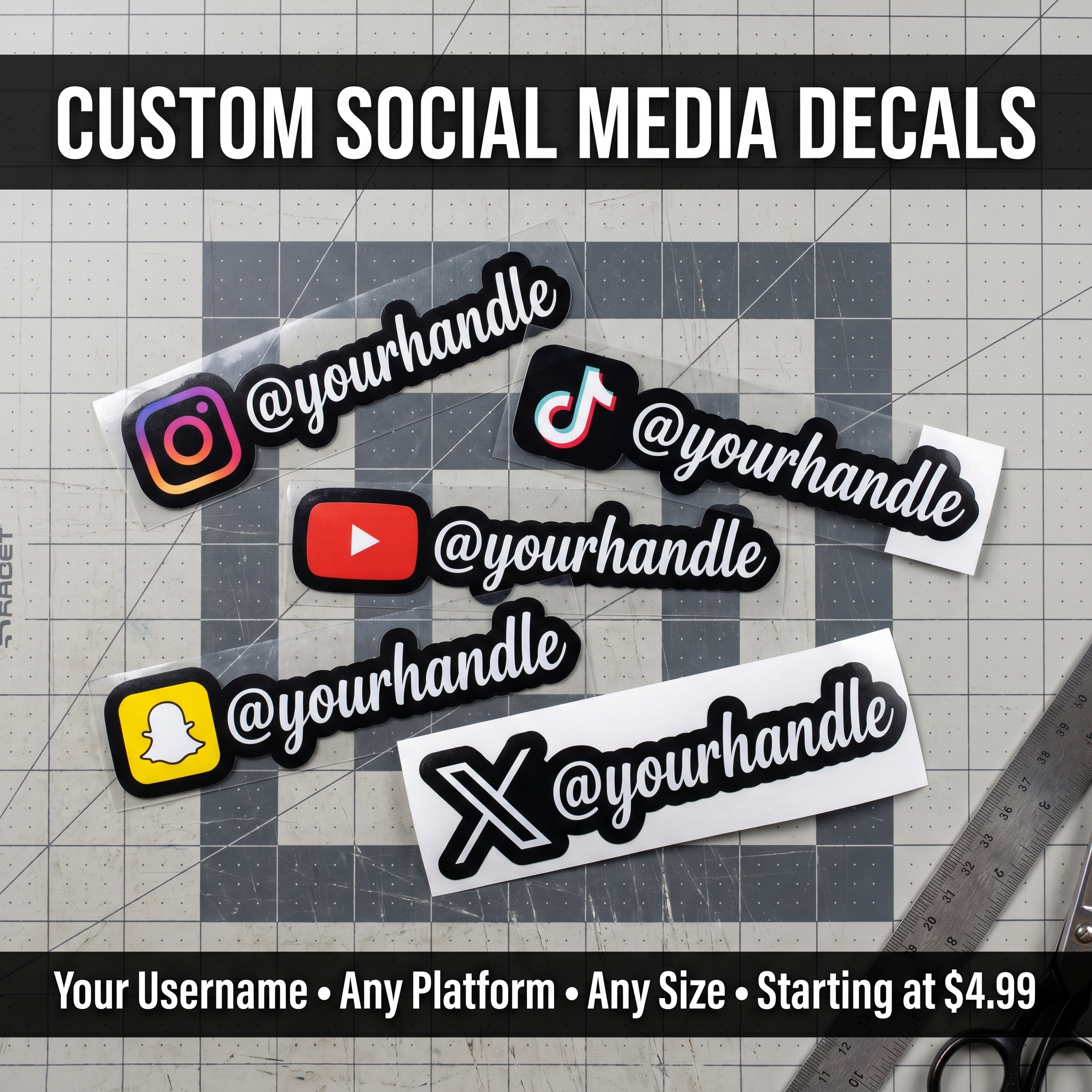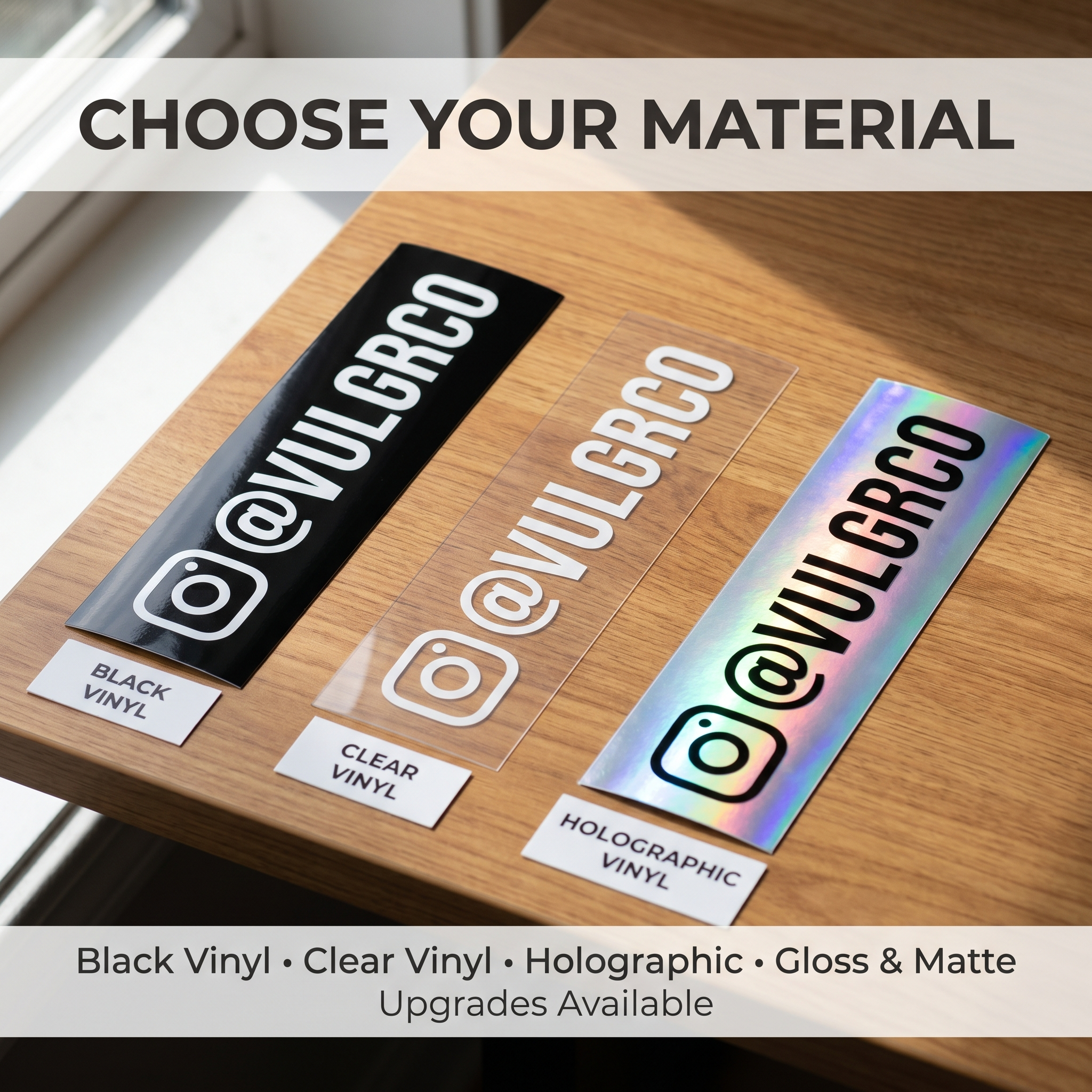

Die-cut and kiss-cut stickers can look identical after you apply them. The difference is what happens to the backing before you peel. A die cut follows the sticker's outline through the backing; a kiss cut leaves extra backing around the sticker.
For a small-business owner or artist, that changes presentation, handling, and how easily a customer can start peeling. Choose around the job the sticker needs to do.
Quick choice: use a shaped backing when the whole piece is part of the presentation. Consider extra backing when easy handling matters. Confirm which cut options are available for your order before preparing artwork.
On this page
- What changes when the backing is cut
- Which cut is easier to hand out
- How borders affect artwork
- Choose a cut and check your proof
- FAQs
What changes when the backing is cut
Think of one round logo printed two ways. The die-cut version arrives as a round piece. A kiss-cut version could have the same round sticker sitting on a larger rectangular backing. The applied logo does not become rectangular just because its backing is.
OnlineLabels explains the distinction between the sticker cut and backing cut. That definition is useful when discussing a project with a printer. It does not establish that every printer offers the same backing sizes or formats.
When ordering custom stickers from Vulgrco, distinguish the finished sticker shape from your preferred backing treatment. A shape selector alone may not answer both questions.
Which cut is easier to hand out
A shaped backing can make a character, logo, or illustrated object feel like a finished piece of merchandise. It also gives customers a clear idea of the applied outline.
Extra backing creates a handling area. That can help when someone is labeling a stack of packages or handing stickers across a busy event table. The benefit depends on the design and backing, so handle a real example before choosing for a large order.
| Your priority | What to check |
|---|---|
| A shaped item for a merch table | Whether the backing follows the artwork |
| Quick peeling during packing | Whether there is a usable starting edge |
| A delicate illustrated outline | Whether the backing supports narrow parts |
| Extra printed backing information | Whether that printing is actually offered |
Do not assume a kiss-cut order includes custom back printing. That is a separate capability.
How borders affect artwork
The backing format does not remove the need for a sensible artwork border. Thin spikes, tiny islands, and closely spaced details can create an awkward shape even when they look sharp on a screen.
Mark which edge is the intended sticker outline. Keep essential lettering comfortably inside it, using the printer's current safe-area guidance. If you want an edge-to-edge background, ask how much bleed the chosen process needs.
Try a paper mockup first. Cut out the proposed silhouette and hold it at the intended size. If a feature is hard to see or feels fragile in paper, it deserves a closer proof review.
Choose a cut and check your proof
Send a short order note: “The applied sticker should follow this outline. Please confirm the backing treatment.” That is more useful than assuming two shops use the same cut-name options.
Check finished dimensions, borders, small text, and whether any transparent areas are intentional. A material sample pack can help with finish choice; ask separately whether it demonstrates the cut formats you want.
Once the cut is confirmed, approve the actual design rather than relying on the product thumbnail.
FAQs
Are die-cut and kiss-cut stickers the same material?
They can be, because the names describe cutting rather than a particular material. Compare the face stock, finish, adhesive, and backing format separately. Two products with different cut names should not be treated as equivalent until their actual specifications match.
Which cut is easier to peel?
Extra backing can provide a convenient place to hold the piece while lifting the sticker. A die-cut design may also peel easily, depending on its shape and construction. If packing speed matters, try the actual format rather than judging from the name.
Can both cuts follow a custom shape?
The sticker itself can follow a custom outline in either format when that option is offered. The difference is whether the backing follows it too. Confirm available shapes, detail limits, and backing treatment with the printer before placing the order.
Does the backing change the finished sticker size?
Extra backing increases the size of the piece you receive, but it does not necessarily increase the applied sticker. Check which dimensions the ordering tool is asking for. State the desired finished sticker size clearly when requesting confirmation.